
Mallorca can also be discovered away from the coastline. Its villages preserve peaceful squares, traditional architecture, local markets, independent shops and a slower pace of life that invites visitors to experience another side of the island.
Which Is the Most Beautiful Village in Mallorca?
Choosing the most beautiful village in Mallorca is no easy task. Some stand out for their heritage, others for their landscapes or for the atmosphere they maintain throughout the year.
The Mallorca of Its Villages
This selection takes you through some of Mallorca’s most charming villages, from inland towns to places where the Serra de Tramuntana meets the Mediterranean.
Rather than creating a ranking, the best approach is to explore them at a relaxed pace and discover what makes each one unique.
Charming Villages Worth Visiting
Mallorca’s villages maintain a close relationship with the landscapes that surround them. Stone streets, orchards, windmills, mountains and village squares remain an essential part of everyday life in many parts of the island.
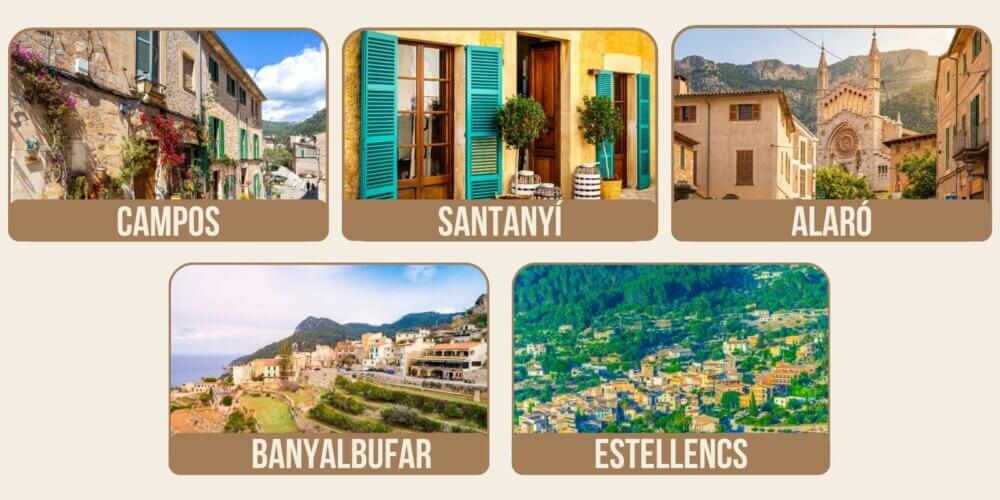
Campos, Tradition in Southern Mallorca
Campos has preserved the agricultural character that has defined this part of Mallorca for generations. The Church of Sant Julià dominates the historic centre, while the streets of the old town retain a peaceful atmosphere throughout much of the year.
Its weekly market and its proximity to natural areas such as Es Trenc make Campos an excellent starting point for exploring the south of the island. Sa Creu Nova is located within the municipality itself, making it easy to discover the surrounding area without long journeys.
Santanyí and the Stone That Defines Its Identity
Santanyí’s distinctive golden sandstone gives the town its architectural identity and can be seen in landmarks such as the Parish Church of Sant Andreu and the Porta Murada, one of the remaining sections of the medieval town walls. Its streets lead to the main square, where the weekly market continues to be one of the town’s main meeting places.
Art galleries, independent shops and restaurants sit alongside historic buildings in a village located just 20 minutes from Sa Creu Nova, making it an ideal destination for a half-day excursion.
Alaró, Between Castles and Mountains
At the foot of the Serra de Tramuntana, Alaró has always been closely connected to the mountains. Alaró Castle, originally built during the Andalusian period and perched on a rocky peak more than 800 metres above sea level, is the destination of one of Mallorca’s best-known hiking routes.
The village itself preserves peaceful squares, traditional stone houses and a relaxed atmosphere that is best enjoyed on foot.
Banyalbufar, Where the Mountains Meet the Sea
The terraced hillsides descending towards the Mediterranean create one of Banyalbufar’s most iconic landscapes. Built with dry-stone walls, these terraces made farming possible for centuries and now form part of the UNESCO World Heritage landscape of the Serra de Tramuntana.
Walking through its streets reveals the close relationship between traditional architecture and the dramatic landscape that defines this stretch of coastline.
Estellencs, The Calm of the Tramuntana
Estellencs is one of the villages that best preserves the peaceful character of Mallorca’s western coast. Narrow streets, stone façades and the nearby sea create one of the island’s most tranquil settings.
Just outside the village lies Cala Estellencs, a small pebble cove that shares the same quiet and unspoilt atmosphere that defines the village itself.
Valldemossa: Gardens, History and Heritage
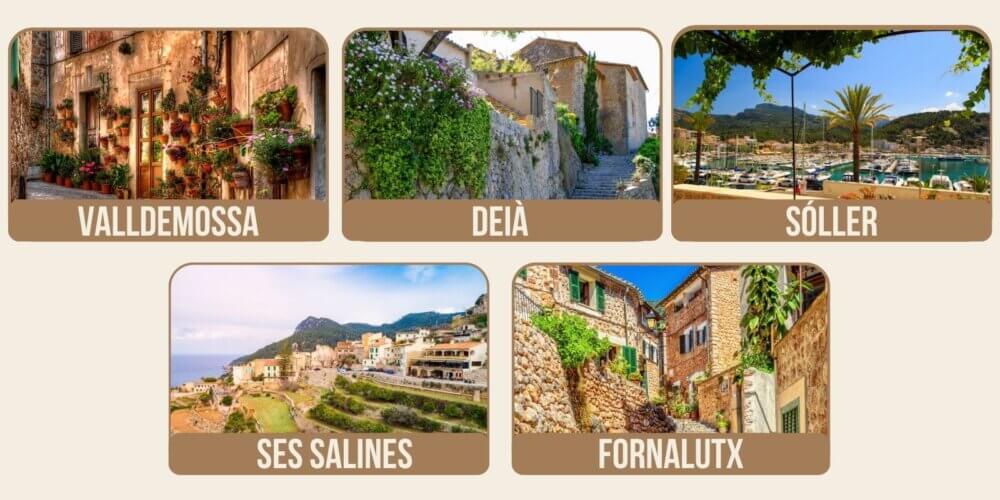
The Royal Charterhouse occupies a central place in Valldemossa’s history. The former monastery became forever associated with Frédéric Chopin and George Sand, who spent the winter of 1838–1839 in the village, and it remains one of Mallorca’s most important cultural landmarks.
Its cobbled streets, gardens and traditional houses complete a visit best enjoyed at a leisurely pace, leaving time to browse the small shops and cafés of the historic centre.
Deià, A Village Open to the Mediterranean
Deià stretches across the slopes of the Serra de Tramuntana with the Mediterranean always present in the landscape. During the twentieth century, it attracted writers, musicians and artists such as Robert Graves, whose former home can still be visited on the outskirts of the village.
Olive groves, terraced hillsides and stone houses accompany the views towards the sea. Just a few kilometres away, Cala Deià completes the journey with its small cove nestled beneath the cliffs.
Sóller, Between Orange Groves and Modernist Architecture
The cultivation of citrus fruits and historic trade with France shaped the history of Sóller. The prosperity of the late nineteenth and early twentieth centuries can still be admired today in its Modernist buildings, which blend harmoniously into a town full of character.
Plaça de la Constitució is the heart of local life, dominated by the Church of Sant Bartomeu and crossed by the historic wooden tram that connects the town with the port. It is one of Sóller’s most recognisable and iconic scenes.
Ses Salines, Tradition and Mediterranean Landscapes
Ses Salines maintains a close relationship with the landscape that gave the town its name. Its salt pans are still in operation today, producing sea salt through a traditional process that relies on the sun and wind of southern Mallorca. They are also the source of the island’s famous flor de sal, one of Mallorca’s best-known gastronomic products.
Located just over fifteen minutes from Sa Creu Nova, the village preserves traditional architecture and the authentic character of Mallorca’s Migjorn region.
Fornalutx, A Timeless Village Worth Discovering
Fornalutx frequently appears on lists of the most beautiful villages in Mallorca—and for good reason. Its cobbled streets, stone houses with green shutters and the orange groves surrounding the village create one of the best-preserved settings in the Serra de Tramuntana.
Early in the morning or during the quieter months of the year, Fornalutx returns to the slow rhythm that best reveals its traditional architecture and its close connection with the Sóller Valley.
How to Explore Mallorca’s Villages at a Slower Pace
Enjoying Mallorca’s most beautiful villages requires slowing down. Leave time to linger in the squares, chat with local shopkeepers or sit down for a leisurely meal without watching the clock.
A Route to Discover the Island at Your Own Pace
Combining inland villages with towns in the Serra de Tramuntana is one of the best ways to experience Mallorca’s contrasting landscapes during a single stay. Weekly markets, local gastronomy and artisan shops complete the journey, offering a more authentic way to discover each destination.
Spring and autumn provide particularly pleasant temperatures for these routes. During summer, setting out early allows you to explore many villages before they become busier, while winter reveals a quieter Mallorca with an entirely different rhythm.
The Ideal Starting Point for Your Stay
Sa Creu Nova’s location offers easy access to many of Mallorca’s most beautiful villages, allowing guests to explore the island from a peaceful setting away from the busiest tourist areas.
The Refuge of Sa Creu Nova
This former 18th-century manor house preserves the charm of traditional Mallorcan architecture while embracing the relaxed pace of inland Mallorca. Its spa and the gastronomic proposal of Tess de Mar, inspired by local produce, complete an experience designed to connect guests with the island through rest, authenticity and exceptional cuisine.